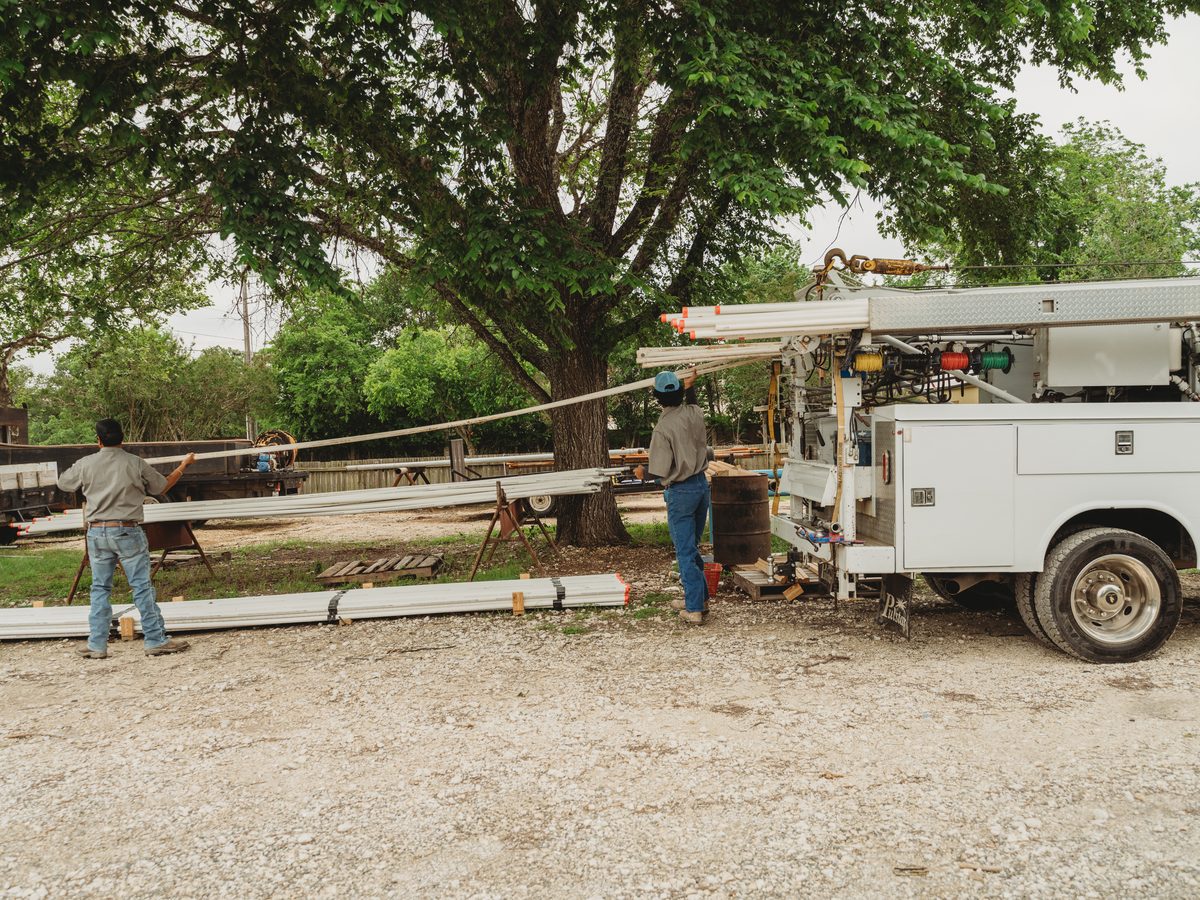
Capping
Temporary. For a sound well you may want to reuse. A watertight cap keeps pollutants out and takes a tool to remove. No state plugging report required.
An old or abandoned well is a safety hazard and a contamination risk. We plug and decommission water wells to Texas standards, seal them so they can't channel pollution into the aquifer, and file the state report for you.
An unused, old, or abandoned water well is more than an eyesore. Left open, it's a safety hazard, and it can act as a direct pipe for surface pollution to travel straight down into the aquifer everyone in the area depends on. Texas requires that a well no longer in use be properly plugged, and the responsibility falls on the landowner.
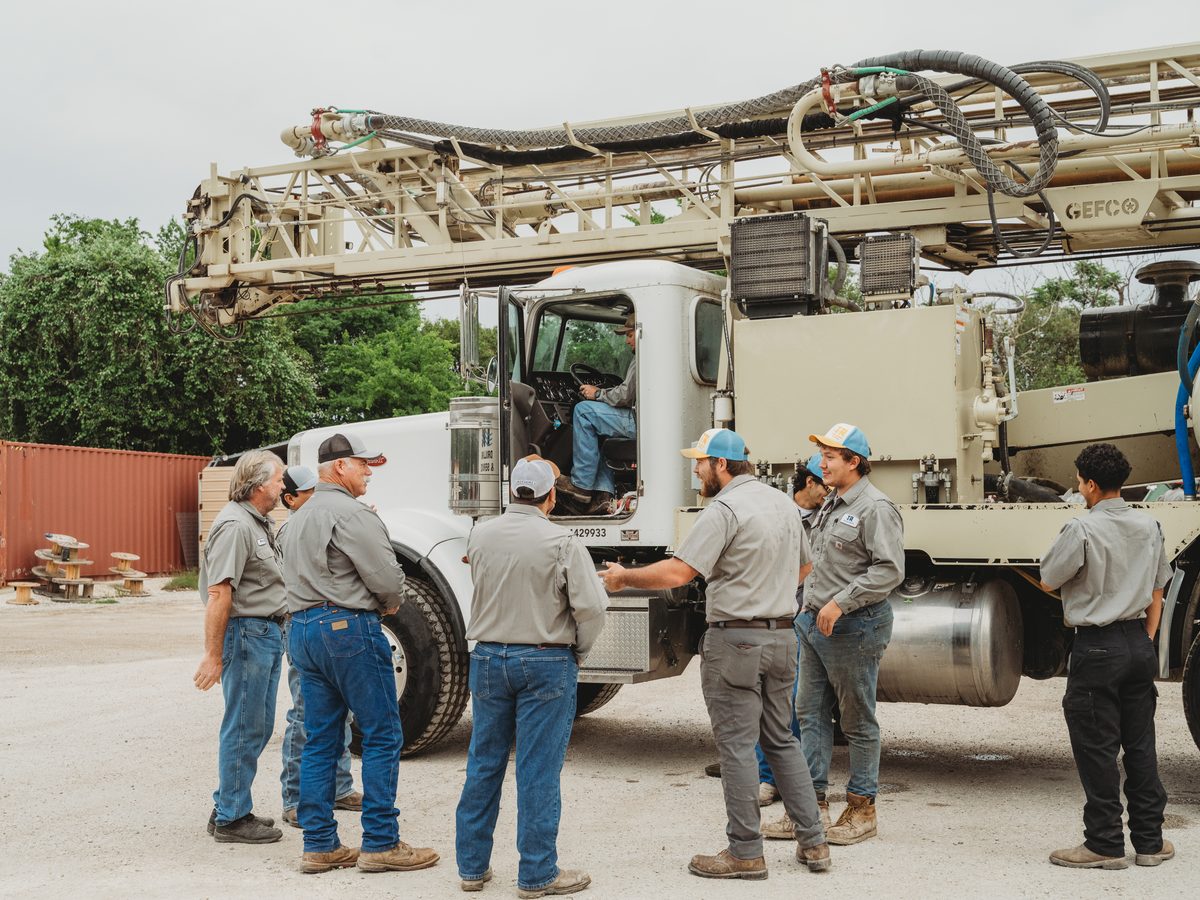
Plugging a well means sealing it from the bottom up with cement and bentonite so it can't transmit contamination or collapse. We decommission wells to Texas Department of Licensing and Regulation standards, then file the State of Texas Plugging Report with TDLR and your groundwater district, so the work is done right and on the record.
Whether you've drilled a new well and need the old one retired, bought a property with an abandoned well on it, or you're a builder clearing legacy wells off a tract, we'll take care of it properly. It protects your land, your liability, and the groundwater.
Tell us about your project and we'll get back to you quickly, often the same day.
Request a QuoteCall (830) 816-3232We confirm the well's depth, diameter, and casing, and what code requires.
We remove the pump, piping, and any debris, then disinfect.
We fill with cement and bentonite grout to TDLR specs, sealing off every water zone.
We file the State of Texas Plugging Report, copy your district, and leave the site clean.
Under Texas Department of Licensing and Regulation rules (16 TAC Chapter 76), a well that is no longer in use and not being maintained is considered abandoned. A well that, because of its condition, is likely to pollute the groundwater is deteriorated, and a deteriorated well must be plugged, not just covered. A sound well you might use again can instead be capped, as long as the cap keeps contaminants out and cannot be removed by hand.
The landowner of record is responsible for plugging an abandoned or deteriorated well, and that responsibility, along with the liability for any contamination it causes, passes to the new owner when a property is sold. Only a licensed Texas water well driller or pump installer can plug another person's well and file the required report. We have held those licenses and plugged Hill Country wells since 1985 (TDLR 2901 WPK, 50287, 58259 WKPT, 61313 W).
Temporary. For a sound well you may want to reuse. A watertight cap keeps pollutants out and takes a tool to remove. No state plugging report required.
Permanent. Required for abandoned or deteriorated wells. Sealed bottom to top with cement and bentonite, then documented on the State of Texas Plugging Report, filed with TDLR and your groundwater district within 30 days.
Plugging an old water well is a small fraction of the cost of drilling a new one. The price depends on the well's depth, diameter, casing, and how easy the well is to reach, and the much larger figures you may see online are for oil and gas wells, not domestic water wells. Several Hill Country groundwater districts, including the Bandera County River Authority and General District, run cost-share programs that can offset part of it. We measure the well and put a firm written price in your hands before any work begins.
Most ranch and ag land coming into development carries old wells. When the lots go onto public water, those wells have to be retired and reported.
When a tract is subdivided and the lots connect to a municipal, MUD, or WCID water system, the legacy livestock, irrigation, and homestead wells on the property are no longer in use and must be plugged to state standards. Platting and survey work flags those wells, and an open or abandoned well can hold up plat approval, financing, or a closing until it is sealed and documented.
We work with builders, developers, and site contractors to handle all of it in one pass:
Tell us how many wells and where, and we will scope the whole site and schedule to your build.
Request a Developer QuoteCall (830) 816-3232Plugging an old water well costs far less than drilling a new one. The price depends on the well's depth, diameter, casing condition, and how easy it is to reach with our equipment, and larger, deeper, or obstructed wells take more work. Several Hill Country groundwater districts, including the Bandera County River Authority and General District, run cost-share programs that help cover plugging, and we can point you to the one for your area. Call us at (830) 816-3232 and we will measure the well and put a firm number in writing before any work begins.
Capping is temporary. A well that is still sound and might be used again can be fitted with a watertight cap that keeps contaminants out and cannot be removed by hand, and no state report is required for a cap. Plugging is permanent. An abandoned or deteriorated well is sealed from the bottom up with cement and bentonite so it can never channel pollution into the aquifer, and that work has to be filed with the state. Under Texas rules, a well that is deteriorated and likely to cause pollution must be plugged, not just capped.
The landowner of record is responsible for any abandoned or deteriorated well on the property, and that responsibility transfers to you when you buy the land. An unplugged well is a known safety hazard and a direct contamination path into the groundwater, and the owner can be held liable for it, so title companies and lenders often want it resolved before closing. If you have found an old or abandoned well on a property you own or are buying, call us at (830) 816-3232 and we will assess it and put a plan in writing.
A proper plugging fills the well from the bottom up with the right materials (usually cement grout, bentonite, or approved fill placed in the correct order) so that surface water and contaminants can never travel down into the aquifer. We clear any pump, pipe, and debris first, verify the depth, then place and seal the plugging materials to Texas standards and finish at the surface. The goal is a permanent seal that protects the groundwater everyone in the area shares, not just a cap over the hole.
Most residential wells are plugged in a single day once we are on site, though deeper or obstructed wells can take longer. In Texas, an abandoned or deteriorated well must be plugged by a licensed water well driller or pump installer, though a landowner may plug a well on their own property. The work is documented on the State of Texas Plugging Report, which we file with TDLR, with a copy to your local groundwater conservation district, within 30 days. We take care of the licensing and the paperwork so you have a clean record that the well was closed correctly.
Under Texas rules, a well that is no longer in use and not being maintained is considered abandoned or deteriorated and should be plugged. Warning signs include an open or loosely covered casing, a well that has gone dry or muddy, standing water around the casing, a collapsed or leaning structure, or a second well left behind after a new one was drilled. An open or failing well is both a safety hazard and a direct path for contamination into the aquifer, so it is worth addressing promptly.
Make sure the company holds a current Texas water well driller or pump installer license, since only a licensed contractor can legally plug a well and file the required state report. Ask whether they will inspect the well in person, provide a written quote, and give you documentation of the completed plugging for your records. TR Drilling and Service has served the Texas Hill Country since 1985, and we are happy to answer your questions at (830) 816-3232 before you commit to anything.
Drilling a replacement? We plug and report the old one too.
Learn moreBuying a property? We locate and assess old wells.
Learn moreYour district may help cost-share a plugging.
Learn moreWe'll decommission it safely and to code, and file the state report. Reach out for a quick quote.