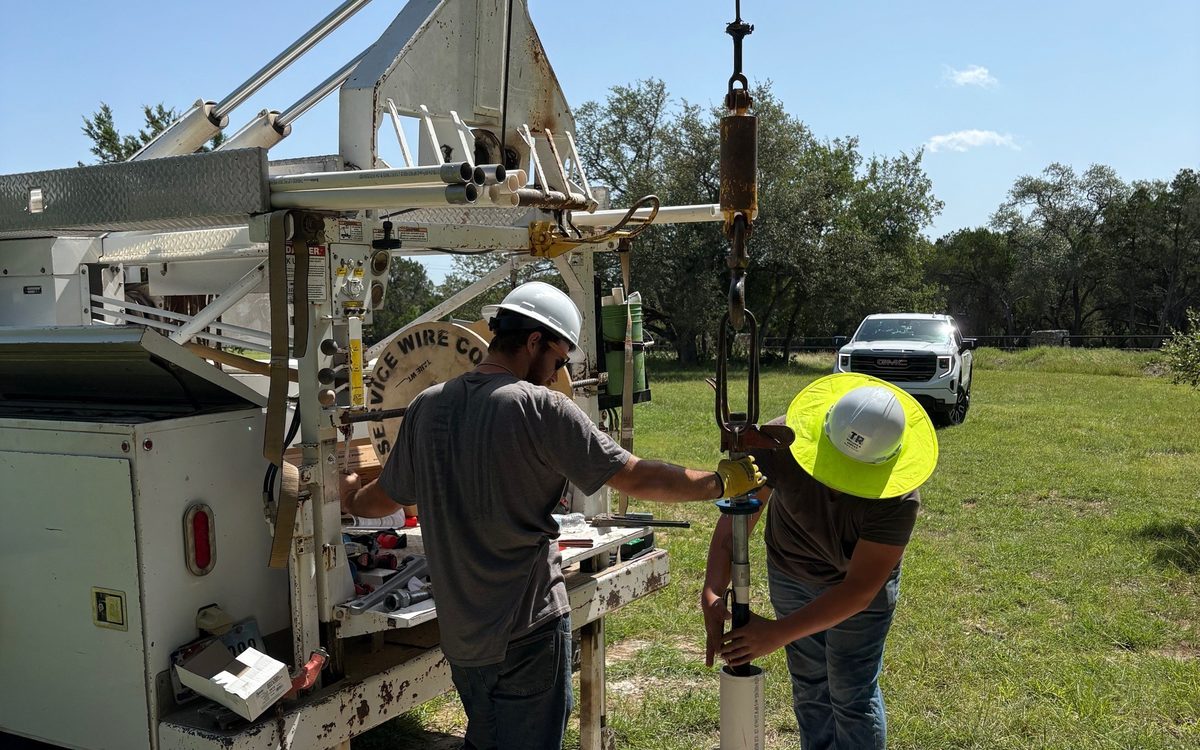

If your well water has turned cloudy or gritty, the first job is figuring out which problem you actually have. Fine silt and turbidity that clears in a glass are usually a filter question. True sand, the gritty material that settles fast and feels like grit between your fingers, is different. It almost always points to a mechanical problem inside the well, and in the Hill Country that means a job for a well professional to diagnose, not just another cartridge filter.
Silt and turbidity: usually a filter question
Plenty of well water carries a small amount of suspended sediment. After heavy rain, surface water can push fine clay and organic material into shallow or older wells, and the water looks cloudy or tea colored for a few days. This is turbidity. The particles are light, they take a while to settle, and a glass of the water slowly clears from the top down.
If that describes what you are seeing, you are mostly dealing with a treatment and filtration question. Common owner steps include:
- A sediment or spin-down filter sized for your flow to catch fine particles before they reach fixtures.
- A water test to confirm what is actually in the water, since cloudiness can come from minerals, bacteria, or surface intrusion rather than sand.
- Reviewing your options in our well water treatment guide before you spend money on equipment you may not need.
Filtration handles fine silt well. What it does not fix is true sand, because true sand is a symptom of something happening down the well itself.
Water trouble now, or planning ahead? Tell us what your well is doing and we will give you a straight answer and a free quote, often the same day.
True sand: usually a well problem
True sand is coarse and heavy. It drops to the bottom of a glass almost immediately, you find it in the bottom of the toilet tank, it clogs aerators and showerheads, and you may hear it rattling through the pressure tank. When you are getting real sand at the tap, a filter is treating the symptom while the cause keeps grinding away. The usual mechanical causes are:
- A pump set too deep or too close to the bottom. When the pump intake sits down in the accumulated sediment at the bottom of the well, it pulls sand straight into the system. Repositioning the pump is a common fix.
- A worn, cracked, or failing well screen. The screen is what keeps formation material out while letting water in. Once it corrodes or splits, sand passes right through.
- Casing or formation breakdown. A cracked or corroded casing, or a borehole wall that is sloughing material, lets sediment enter the well that was never supposed to be there.
Each of these is a physical cause inside the well, and each one needs hands-on diagnosis. That is the difference that matters: silt is something you filter, but true sand is something you find and repair.
Why running sand is worth taking seriously
Sand is abrasive, and a submersible pump is not built to move it. Pumping sand wears out impellers and seals, scores the inside of the pump, and shortens its life considerably. It also chews up everything downstream: control valves, the pressure tank, faucet cartridges, water heaters, and any treatment equipment you have installed. Left alone, a screen or casing problem tends to get worse, not better, and a pump that is failing from sand wear often shows other warning signs first. Our guide to the signs a well pump is failing covers what to watch for, like sputtering air, dropping pressure, or short cycling.
The Hill Country angle
Our geology makes sand and sediment a real local issue. Wells here draw from the Trinity, Edwards, Edwards-Trinity, and Hickory aquifers through fractured limestone and karst, so water moves along fissures and bedding planes that can carry fine material with it. The Hickory sandstone in particular can produce sandy water in some areas. Add in the many older wells across Boerne, Bandera, Comfort, Fredericksburg, Kerrville, and the surrounding counties, where original screens and casing have had decades to corrode, and a sudden change in your water is worth a closer look rather than a wait and see.
What to do next
Start by deciding which problem you have. If the cloudiness is light and clears slowly, treat it as a filtration and water quality question and confirm it with a test. If you are getting gritty true sand, settling fast and showing up at your fixtures, that is a mechanical issue to diagnose before it costs you a pump.
- For diagnosis of a screen, casing, or sediment problem, see water well repair. A professional can check pump depth, inspect the well, and identify where the sand is coming from.
- If the pump is worn or set wrong, pump installation and repair covers repositioning or replacing it so it is no longer pulling from the sediment at the bottom.
- If money is part of the decision, our financing options can help you plan the work.
If you are not sure whether you are looking at harmless silt or true sand, give us a call and describe what you are seeing. We have worked Hill Country wells since 1985, and we are happy to help you tell the difference before it turns into a bigger repair.